


Marketing
- 10 min read
- Andres S.
What does SEO stand for? What SEO is and its role in marketing
SEO stands for search engine optimisation. Here's what that means, how search engines work today, what the SEO process involves and where SEO fits in your marketing.
- 10 min read
SEO stands for search engine optimisation (search engine optimization in US spelling). It's the work of making your website easy for search engines such as Google and Bing to find, understand and recommend to people searching for what you offer, without paying for the placement. In marketing, SEO's role is to turn the searches your customers already make into visits, enquiries and sales.
This guide explains what the acronym means, how search works today, what the SEO process involves and how SEO fits alongside your other marketing channels.
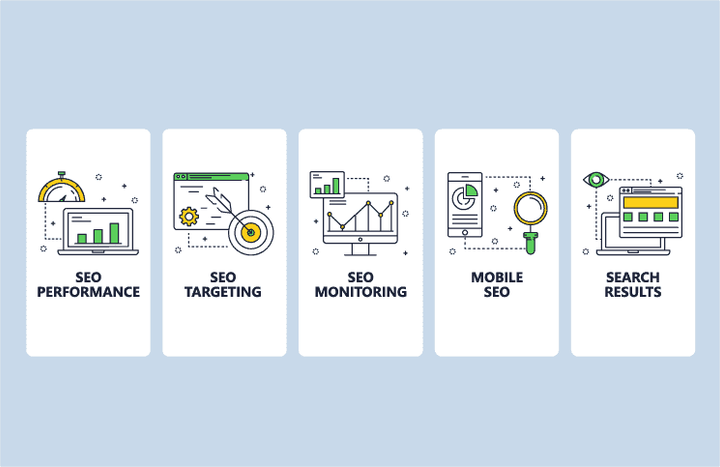
What does SEO stand for?
SEO is short for search engine optimisation. You'll hear the three letters used in a few ways:
- The practice: "We need to invest in SEO" means improving a website so it performs better in search.
- The person: someone who does this work is often called an SEO, or an SEO specialist.
- The traffic: "SEO traffic" usually means visitors who arrive from the unpaid search results, also called organic search.
Google's own definition, from its SEO Starter Guide, is a useful one:
SEO—short for search engine optimization—is about helping search engines understand your content, and helping users find your site and make a decision about whether they should visit your site through a search engine.
Notice the two halves. One is technical: helping search engines understand your pages. The other is human: helping people find you and decide you're worth a click. Good SEO isn't about tricking an algorithm. It's about being the most useful, easy-to-find answer for the people you want to reach. Google's full SEO Starter Guide is worth a read if you want more detail.
SEO, SEM and PPC: how the terms fit together
These acronyms often get mixed up:
- SEO earns unpaid placements in the organic search results.
- PPC (pay-per-click) is advertising where you pay each time someone clicks your ad. Search ads in Google Ads are a common example.
- SEM (search engine marketing) is the broader work of getting visibility on search engines. Today it usually refers to paid search, although some marketers use it to cover both paid and organic.
If you're weighing up paid and unpaid search, our guide to organic versus inorganic SEO compares them side by side.
How search engines work today
Whether someone types a question, speaks into their phone or searches with a photo, a search engine has to sort through an enormous number of pages and return the most useful ones almost instantly. Google describes the process in three stages: crawling, indexing and serving results.
1. Crawling: finding your pages
There's no central register of every page on the web, so search engines are constantly looking for new and updated pages. Google's crawler, Googlebot, finds pages by following links from pages it already knows about and by reading sitemaps that site owners submit. As it crawls, Google renders each page much as a browser would, running JavaScript with a recent version of Chrome, so it can see what visitors see.
Crawlers can't log in, so anything behind a password stays invisible to them. And Google can only follow links written as standard HTML links, which is why every page you care about should be linked from at least one other page on your site.
2. Indexing: understanding your pages
Next, Google analyses each page's text, images, video and key tags, such as the title, and stores what it learns in the Google index, a huge database. Along the way it works out whether a page duplicates another one and, if so, which version to show. Not every page that's crawled ends up in the index.
3. Serving: ranking the results
When someone searches, Google looks through its index for the pages that best answer that query. Google says the factors it weighs include:
- Meaning: what the person is really looking for, even when the query is short or vague.
- Relevance: whether the content matches that need, beyond simply containing the same words.
- Quality: signals of expertise, authoritativeness and trustworthiness, such as whether other prominent websites link to or refer to the content.
- Usability: when other things are roughly equal, content that is mobile-friendly and loads quickly may perform better.
- Context: things like the searcher's location, language, device and search settings.
Google is also clear on two points: it doesn't accept payment to crawl a site more often or rank it higher, and there's no guarantee any page will be crawled, indexed or shown, even when it follows the rules.
AI Overviews and AI Mode
Google's results can include AI Overviews, which are AI-generated summaries with links to the pages they draw on, and Google also offers AI Mode, a search experience built around AI-generated answers. Google's guidance is that the usual SEO fundamentals still apply. To be shown as a supporting link, a page must be indexed and eligible to appear in Google Search with a snippet, so the work that helps you rank in regular results is the same work that helps you appear in AI features. Google's page on AI features and your website explains more.
Mobile-first indexing and page experience
Google crawls and indexes websites with its smartphone crawler, so the mobile version of your pages is the one it uses for indexing and ranking. If important content only appears on the desktop version, Google won't use it.
Speed and responsiveness count too. Google's Core Web Vitals measure loading (Largest Contentful Paint), responsiveness (Interaction to Next Paint, which replaced First Input Delay in March 2024) and visual stability (Cumulative Layout Shift). You can check them in Search Console or with PageSpeed Insights. Google says there's no single page experience signal, so treat these metrics as part of making your site pleasant to use rather than a score to chase.
The SEO process, step by step
SEO isn't a one-off job. It's a cycle you repeat as your business, your customers and search engines change.
1. Research your audience and their searches
Start with people, not keywords. What problems do your customers have, and what words do they use to describe them? Then check how they actually search:
- Google Search Console (free) shows the searches your site already appears for.
- Keyword Planner, a free tool inside Google Ads, suggests related keywords and estimates how often they're searched.
- The results themselves: search your most important terms and look at what ranks. The kinds of pages that appear, whether guides, product pages, local businesses or videos, tell you what Google thinks searchers want.
Group searches by intent. Someone searching "how to fix a leaking tap" wants instructions; someone searching "emergency plumber near me" wants to hire someone now. Each needs a different page.
2. Make your site easy to crawl and index
- Use a clear structure, with every important page linked from at least one other page.
- Submit a sitemap in Search Console and use its URL Inspection tool to check whether key pages are indexed.
- Make sure your site works well on mobile, loads quickly and is secure.
- Keep pages you don't want in search, such as thank-you pages, out of the index with a noindex tag. Blocking a page in robots.txt stops it being crawled, but its address can still appear in results.
3. Create helpful, people-first content
Google says its ranking systems aim to reward helpful, reliable information created for people, not content made mainly to rank. It sums up the qualities it looks for as E-E-A-T: experience, expertise, authoritativeness and trustworthiness, with trust the most important.
In practice, that means content that:
- answers the question fully, in plain language;
- shows first-hand experience, such as your own examples, photos, results and opinions;
- is written or reviewed by people who know the subject, and makes clear who they are;
- is kept accurate and up to date.
Using AI to help create content isn't against Google's rules in itself, but mass-producing pages without adding value can breach its spam policy on scaled content abuse.
4. Optimise each page
- Title: a clear, specific title that uses the words people search with. It's often what appears as the clickable headline in results.
- Headings: a main heading that matches the topic, and subheadings that make the page easy to scan.
- Meta description: a short, accurate summary that may be shown as the snippet under your title.
- Images: descriptive file names and alt text, which help with accessibility and image search.
- Internal links: links to related pages on your site, with descriptive anchor text rather than "click here".
- URLs: short, readable addresses that describe the page.
A few things you can stop worrying about. Google says it has no notion of an ideal keyword density, it ignores the meta keywords tag, and stuffing pages with keywords breaks its spam policies. Write naturally for your reader.
5. Earn links and mentions
Google uses links as a signal of a page's relevance and to discover new pages, and whether prominent websites link to or mention your content is one of the ways it gauges quality. The way to earn them hasn't changed: publish things worth referencing, build genuine relationships with partners, suppliers, industry bodies and media, and make sure you're listed where your customers look. Buying links to manipulate rankings breaks Google's spam policies, and any paid or sponsored links should be marked with a rel="sponsored" or rel="nofollow" attribute.
If you serve a local area, keep your Google Business Profile complete and accurate so you can appear in local results and on Google Maps.
6. Measure, learn and improve
Search Console's Performance report shows the searches you appear for, along with clicks, impressions, click-through rate and average position, which you can break down by query, page and country. Pair it with your website analytics to see what those visitors do next: enquire, book or buy.
Expect results to build over months rather than days. Track progress against business outcomes, not just rankings, and keep improving the pages that are close to the top.
The role of SEO in marketing
People turn to search engines when they have a need: a problem to solve, a product to compare, a business to call. SEO puts you in front of them at that moment, when they're already looking, rather than interrupting them with a message they didn't ask for.
That's what makes organic search such a valuable channel:
- It meets existing demand. You're answering questions people are already asking.
- It keeps working. A page that ranks well can bring visitors for a long time without a cost per click.
- It builds trust. Turning up with useful answers again and again makes your brand familiar and credible.
- It supports everything else. The research, content and website improvements behind SEO also make your ads, social posts and emails work harder.
The trade-off is time. SEO needs ongoing effort, rankings are never guaranteed and your competitors are working on theirs too, so it works best as part of a wider marketing plan.
SEO and digital marketing: what's the difference?
SEO and digital marketing overlap, but they're not the same thing. SEO focuses on visibility in organic search, while digital marketing covers your whole online presence: your website, ads, social media, email and more. In practice, a good SEO specialist has to understand the rest of your marketing, and the rest of your marketing works better when it's built with search in mind.
How SEO works alongside your other channels
- Paid search. Ads give you visibility while your organic rankings grow, and the search terms report in Google Ads shows real searches that can inspire new content. Plan keywords and landing pages together so both channels pull in the same direction. Our 7 SEM tactics cover the paid side.
- Social media. Social posts aren't a shortcut to higher rankings, but they help good content get seen, shared, searched for and linked to. Read more about the benefits of integrating SEO and social media.
- Content marketing. Content is the raw material of SEO. A plan built on your customers' real questions gives you pages that rank and material for every other channel, as our guide to content creation for small businesses explains.
- Website design and development. Fast, mobile-friendly, accessible pages with a clear structure are the foundation of SEO, so involve SEO early in any redesign rather than after launch. See the elements of an outstanding business website.
- Conversion and user experience. Ranking is only half the job. Clear calls to action, a smooth path to enquire or buy, and regular testing turn visitors into customers.
- PR and brand mentions. Coverage in respected publications can earn links and lead more people to search for your brand by name.
Common questions about SEO
Can you pay Google to rank higher?
No. Google says it doesn't accept payment to rank pages higher in its organic results. You can pay for ads, which are labelled as sponsored, but buying ads doesn't change your organic rankings.
How long does SEO take?
It depends on your website's starting point, your competition and how much you invest. Fixing technical problems can sometimes lift results sooner, while ranking for competitive searches usually takes months of steady work.
Is SEO still worth it now that search shows AI answers?
Yes. Google's AI features draw on pages that are indexed and eligible to appear in Search, and Google says the same SEO fundamentals apply. Helpful, well-organised content from a trustworthy website is what regular results and AI answers both rely on.
Can I do SEO myself?
Many small businesses handle the basics themselves with free tools like Search Console and Keyword Planner. As your goals grow, a specialist can help with technical issues, content strategy and measurement.
If you'd like help building SEO into your marketing, from research and content to technical fixes and reporting, our digital marketing team can help you work out where to start.
Want to know what a new client really costs you?
Book a 30-minute chat. Bring your current ads and last month’s report, and we’ll tell you straight what’s working and what isn’t.
Get the monthly notes
One email a month: what we automated, what broke, and what we’d do differently.


